
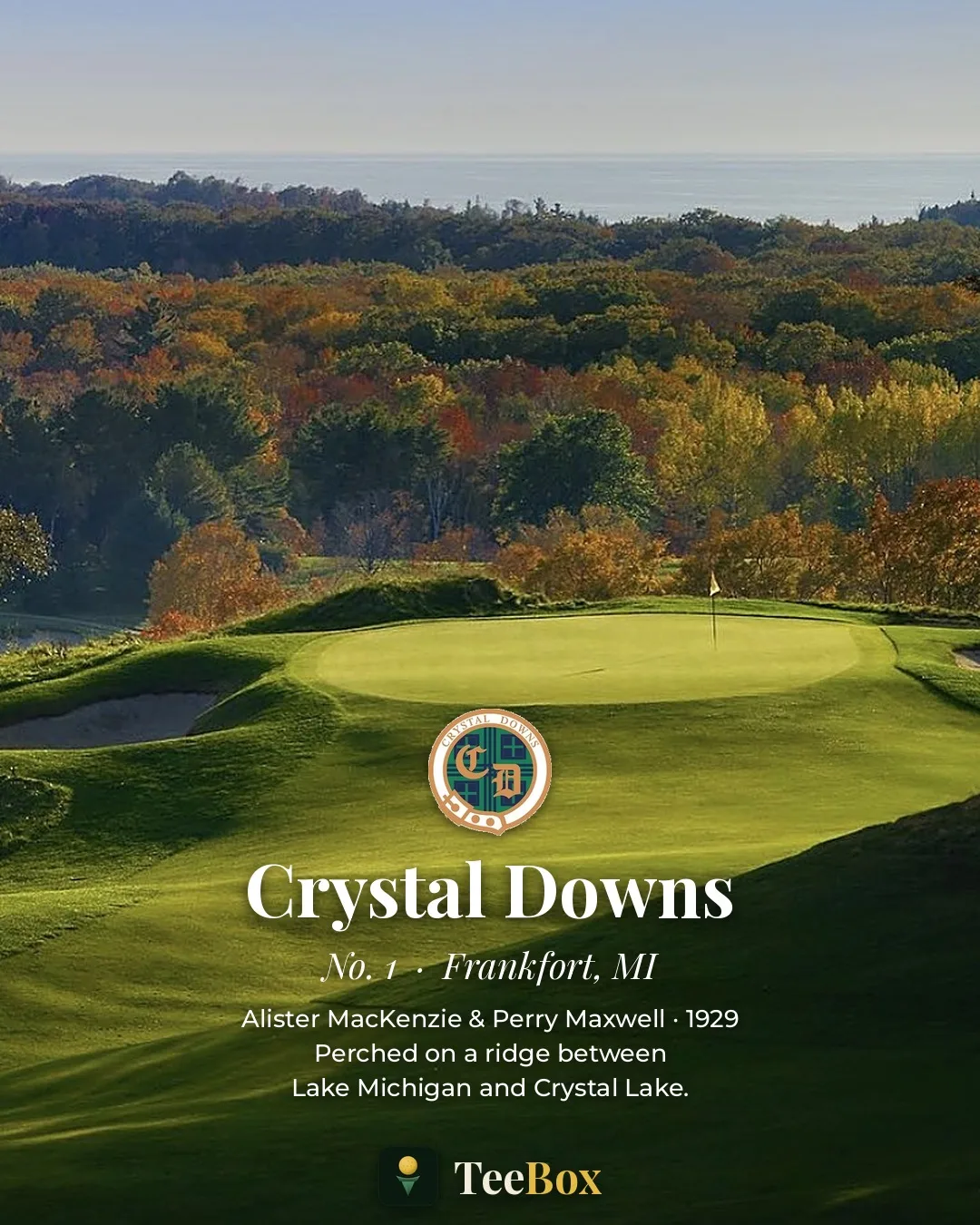
The best course in the state and, for a lot of people who have played it, one of the best anywhere. MacKenzie walked the ridge between Lake Michigan and Crystal Lake and found a piece of ground that did most of the work for him; Perry Maxwell stayed on to build it and left his own fingerprints on the greens. The result is the most severely contoured set of putting surfaces you will find outside Augusta — the 7th and 8th in particular ask questions that have nothing to do with how far you hit it. Short by modern numbers, inexhaustible by any other measure.

Ross laid it out in 1918; Robert Trent Jones Sr. sharpened it into something else entirely for the 1951 U.S. Open, narrowing the fairways and pushing bunkers into the landing areas until the field could not cope. Ben Hogan closed with a 67 and said he had brought “this monster” to its knees, and the name stuck. It has since hosted more major championships than any course in the state, plus the 2004 Ryder Cup, and a Gil Hanse restoration has brought back the Ross width and bunker shapes that Jones had designed away.
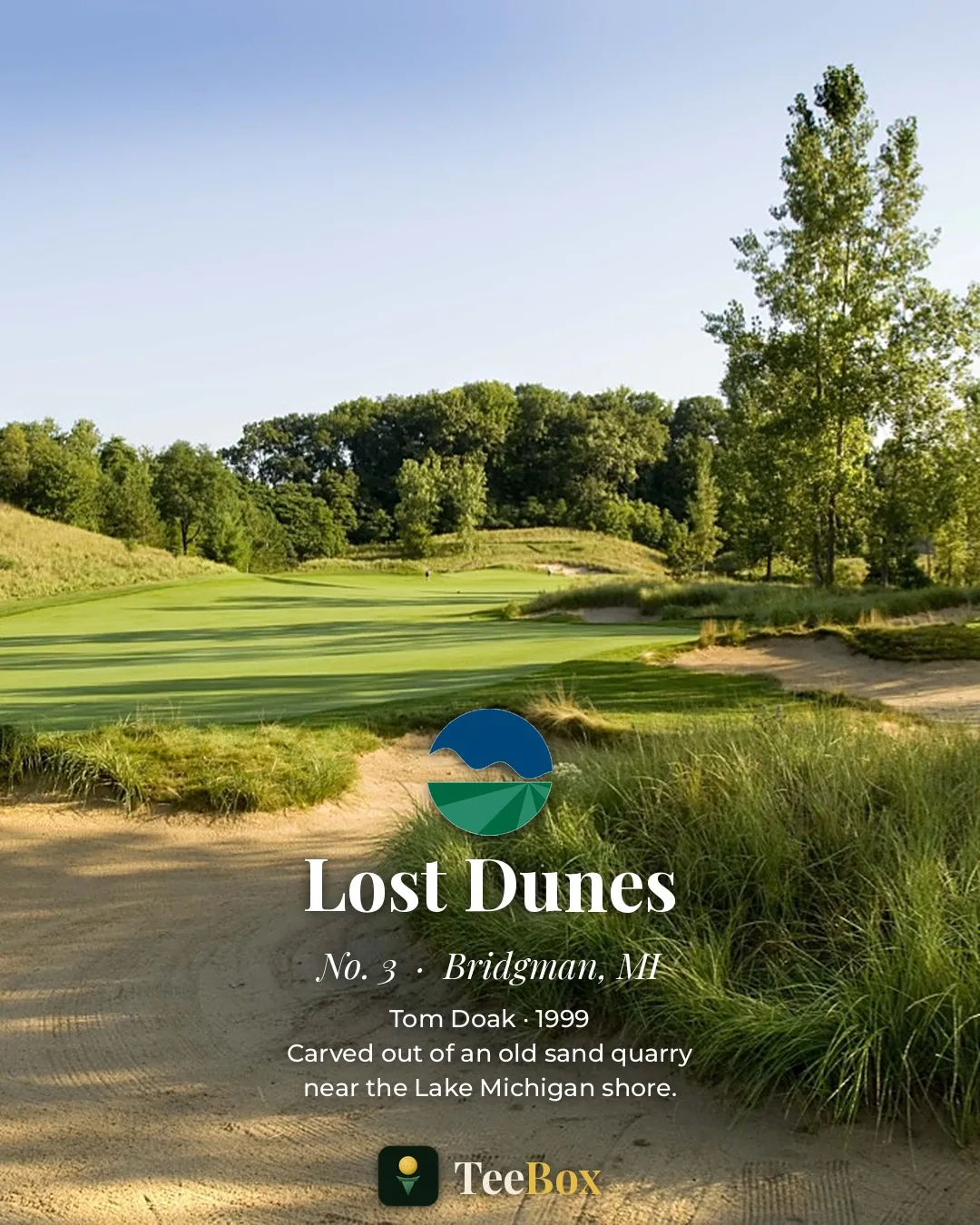
An early Doak, built on an old sand quarry a few miles inland from the lake — a site most architects would have called ruined. He used the quarry pits as hazards and the spoil as movement, and the holes that result feel excavated rather than constructed. The greens are as bold as anything he has built since, and the routing keeps finding new ways through ground that looks, from the road, like it has nothing to offer. Proof that the land matters less than what you see in it.
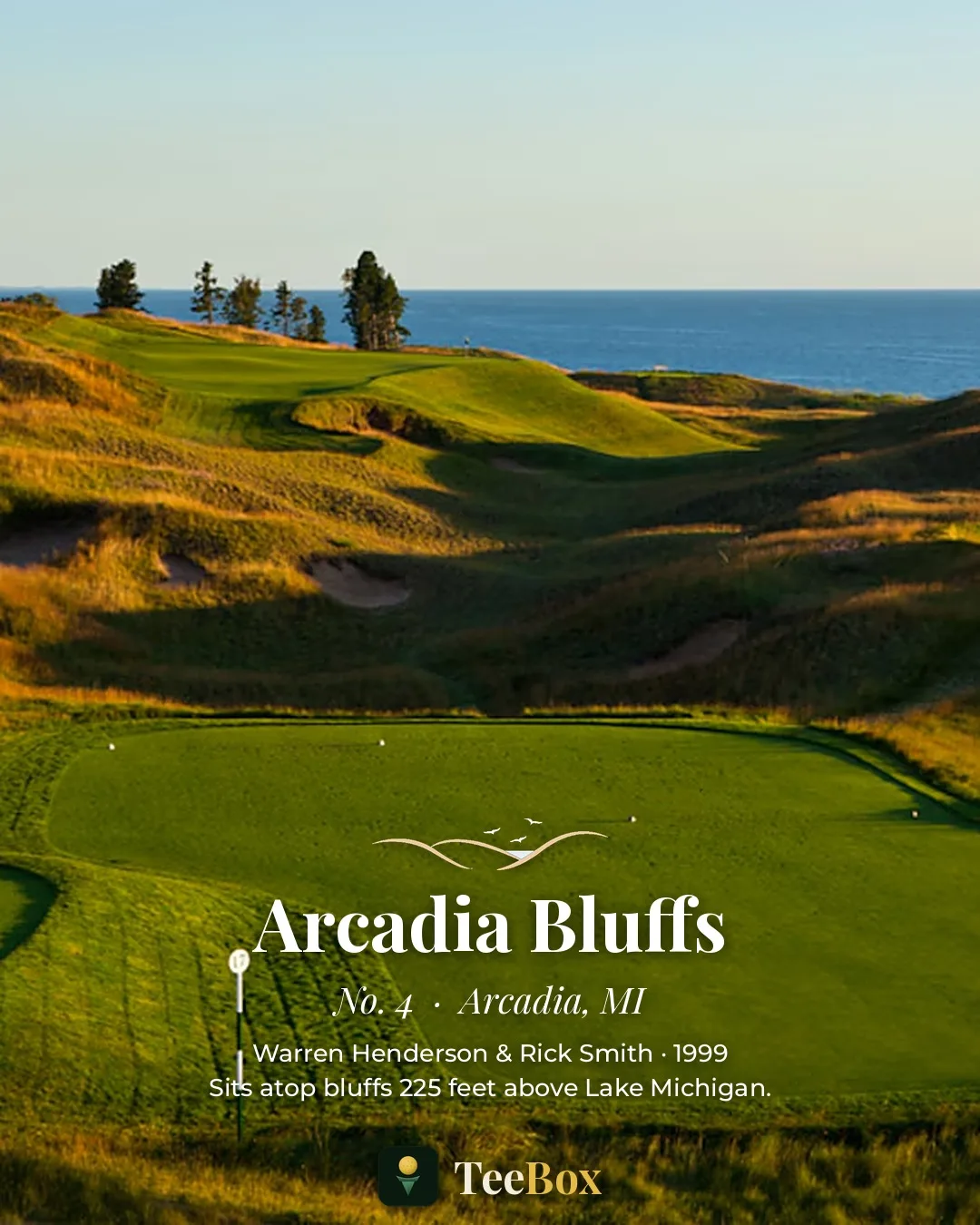
The one everybody has seen a photograph of, and for once the photographs undersell it. The course sits on bluffs 225 feet above Lake Michigan, with the water in view on most of the round and wind that turns a stock 7-iron into a guess. It is resolutely public — anyone can book it — which is rare for a course this scenic and this good. The newer South Course next door, a flat, geometric homage to Chicago Golf Club, is almost its opposite and worth a second day.

Mike DeVries grew up on this kind of northern-Michigan glacial ground and built Kingsley to play the way it drains: firm, fast, and brown by August. There is almost no earth moved. Fairways tilt, greens sit in natural hollows and on natural shelves, and the ball keeps running long after you expect it to stop. It is the most committed ground-game course in the Midwest, and it rewards the player willing to land a shot forty yards short of a flag.

Nine holes, no tee sheet, no clubhouse to speak of — and one of the most quietly influential pieces of golf architecture in America. Mike Keiser built it in the dunes near New Buffalo as a private indulgence, discovered that sandy ground and a minimal hand produced something people would travel for, and went looking for a bigger version of the same idea. What he found was Bandon Dunes. Every modern destination resort built on sand traces back, in some way, to these nine holes.
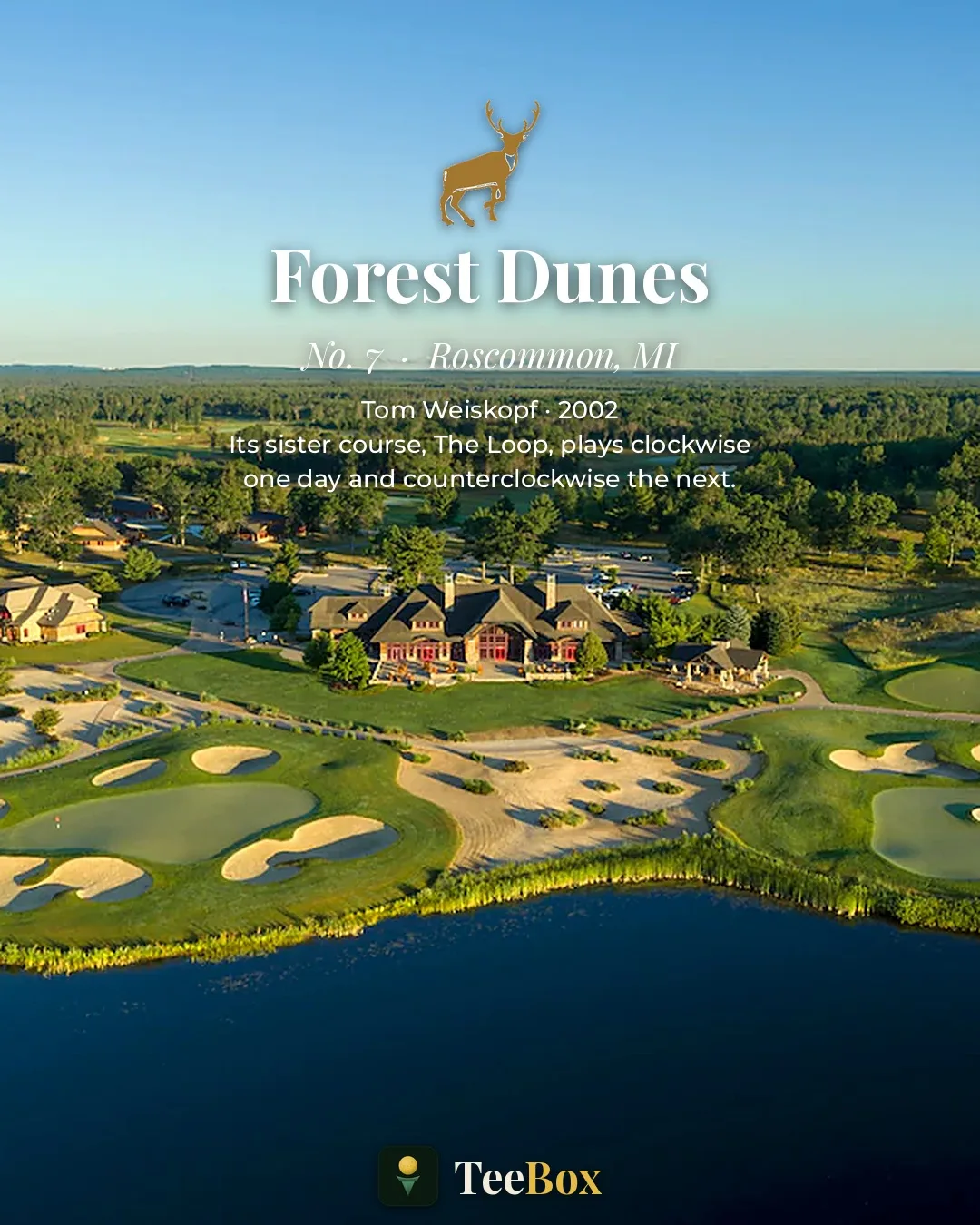
Weiskopf's original course is a strong, sandy, strategic test in the Huron National Forest, and on its own it would belong on this list. What makes Roscommon a pilgrimage is what sits beside it: The Loop, Tom Doak's reversible course, which plays clockwise one day and counterclockwise the next over the same ground. Two genuinely different golf courses occupying one set of greens — there is nothing else like it in the country, and you need two days to see the point.

Thirty-six holes of Donald Ross inside the Detroit city limits, which is a sentence that surprises people who do not know the city. The North is the stronger of the two: classic Ross green complexes, crowned and falling away at the edges, defended by bunkering that has been carefully restored rather than modernised. Since 2019 it has hosted the PGA Tour's Rocket Classic, and the Tour's scoring has done nothing to diminish it — the course gives up birdies and takes them straight back around the greens.
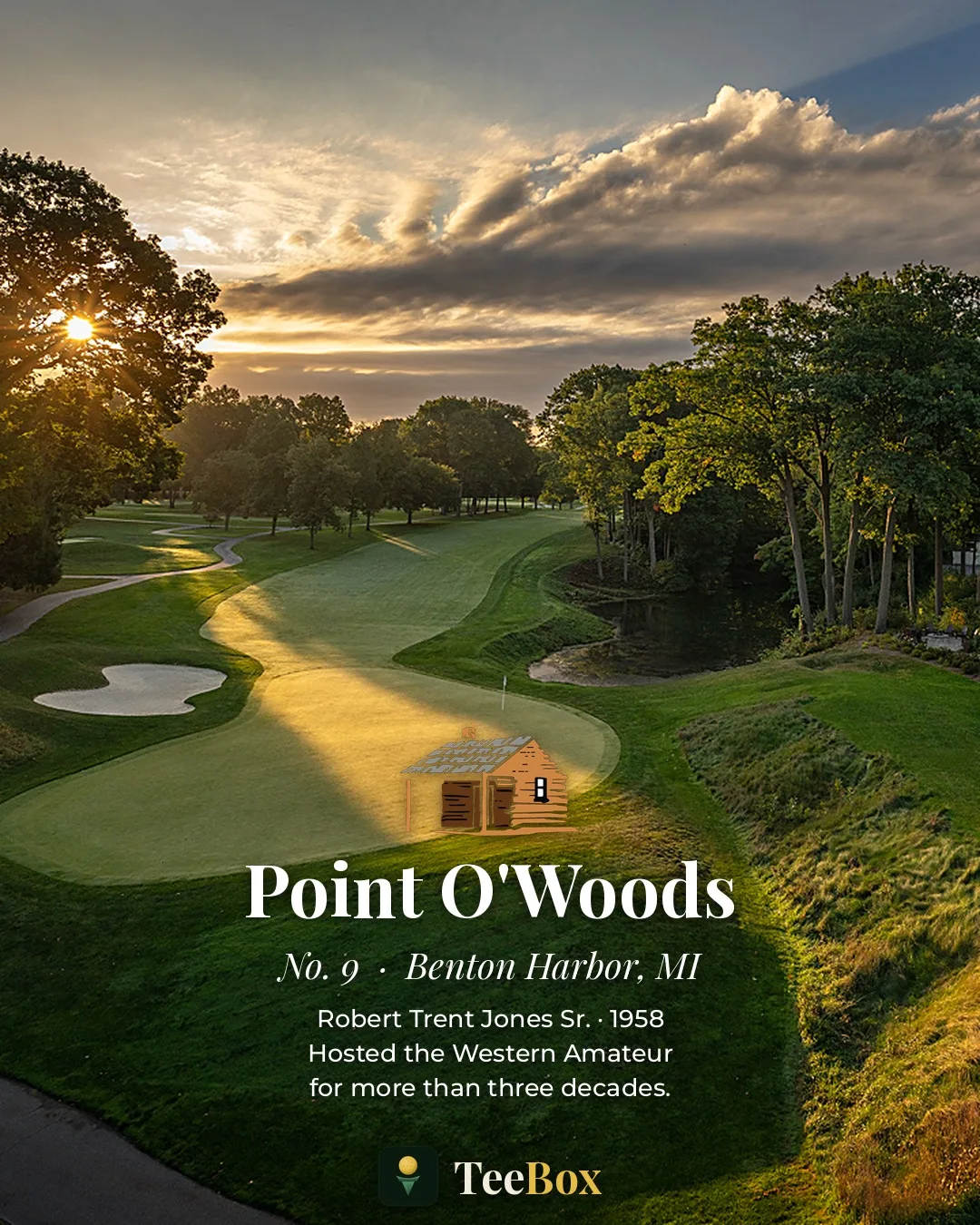
For more than three decades this was the home of the Western Amateur, which means the list of players who have been tested here reads like a roll call of the modern game — Tiger Woods won it in 1994. Trent Jones built it in his prime: long, muscular, heavily bunkered, with greens that reject anything approaching from the wrong angle. It is a championship course that never needed a championship stretched over it, and amateur golf in America is poorer for the Western having moved on.

The classic up-north round, and a reminder that northern Michigan's golf did not begin with the resort boom. William Watson's 1925 layout near Lake Charlevoix has hosted the Michigan Amateur more often than any other course, and it has survived a century essentially intact — no stretching, no reinvention. Walkable, unpretentious, and full of the quiet strategy that goes missing when a course gets renovated every decade. Tom Watson has called it one of his favourites, and it is easy to hear why.