 Yale
Yale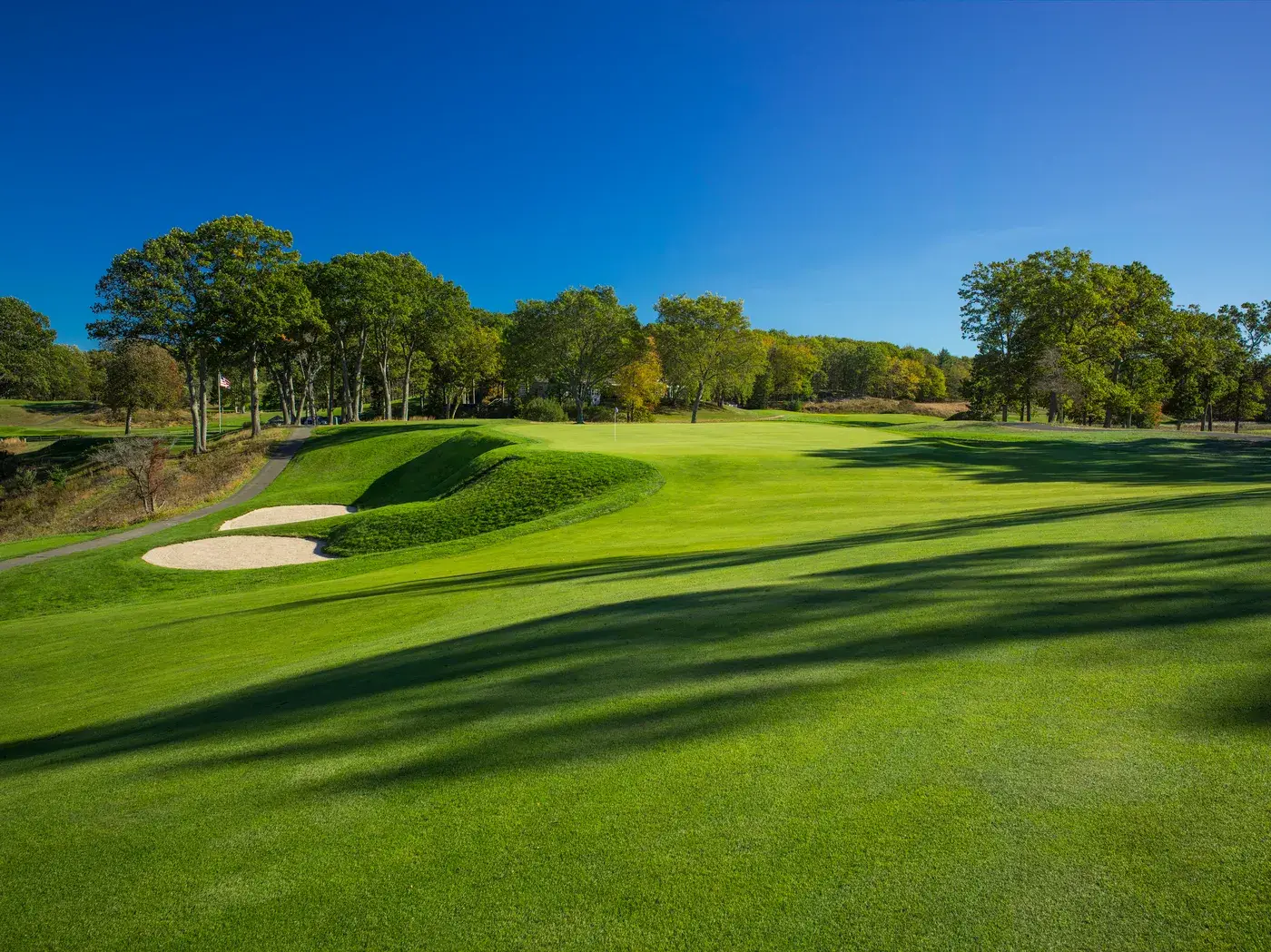
The undisputed king of college golf. Macdonald and Raynor blasted this out of rugged Connecticut woodland and rock, and it plays like a museum of the great template holes — Redan, Biarritz, Cape — built at a scale nobody attempts anymore. The par-3 9th, a downhill Biarritz with a chasm of a swale running through a green the size of a tennis court, is one of the most photographed holes in America. If you only play one course on this list, play Yale.
 Ohio State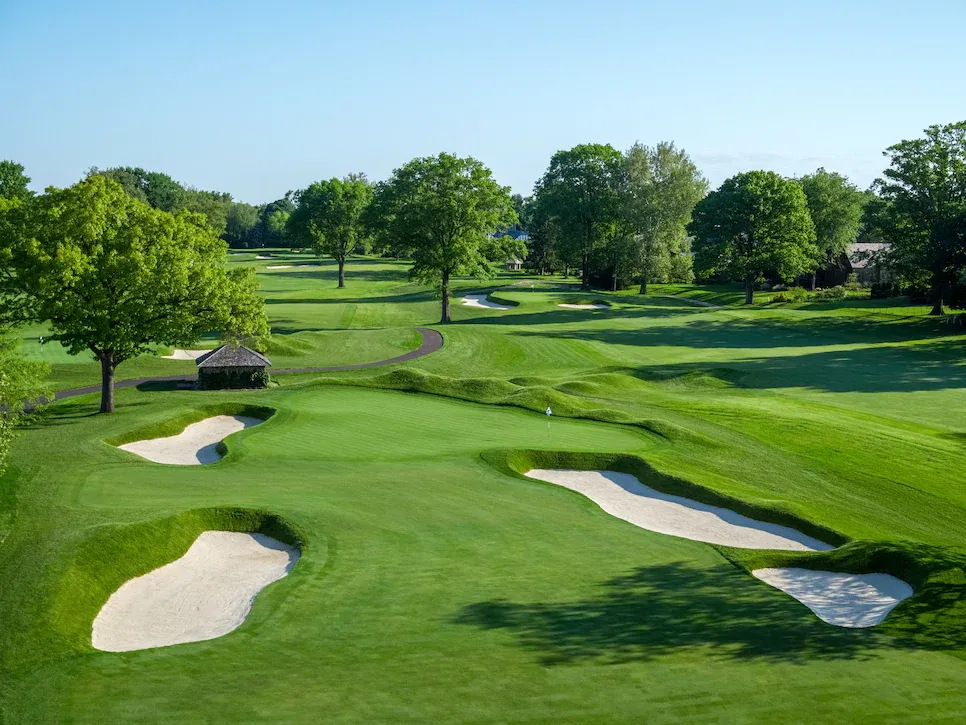
Alister MacKenzie’s Midwest heavyweight, and the course where a young Jack Nicklaus learned to compete. A Nicklaus-led restoration in the 2000s brought back MacKenzie’s bold bunkering and tumbling green contours after decades of quiet softening. It’s long, muscular, and every bit a championship test — the closing stretch has settled plenty of Big Ten titles.
 Stanford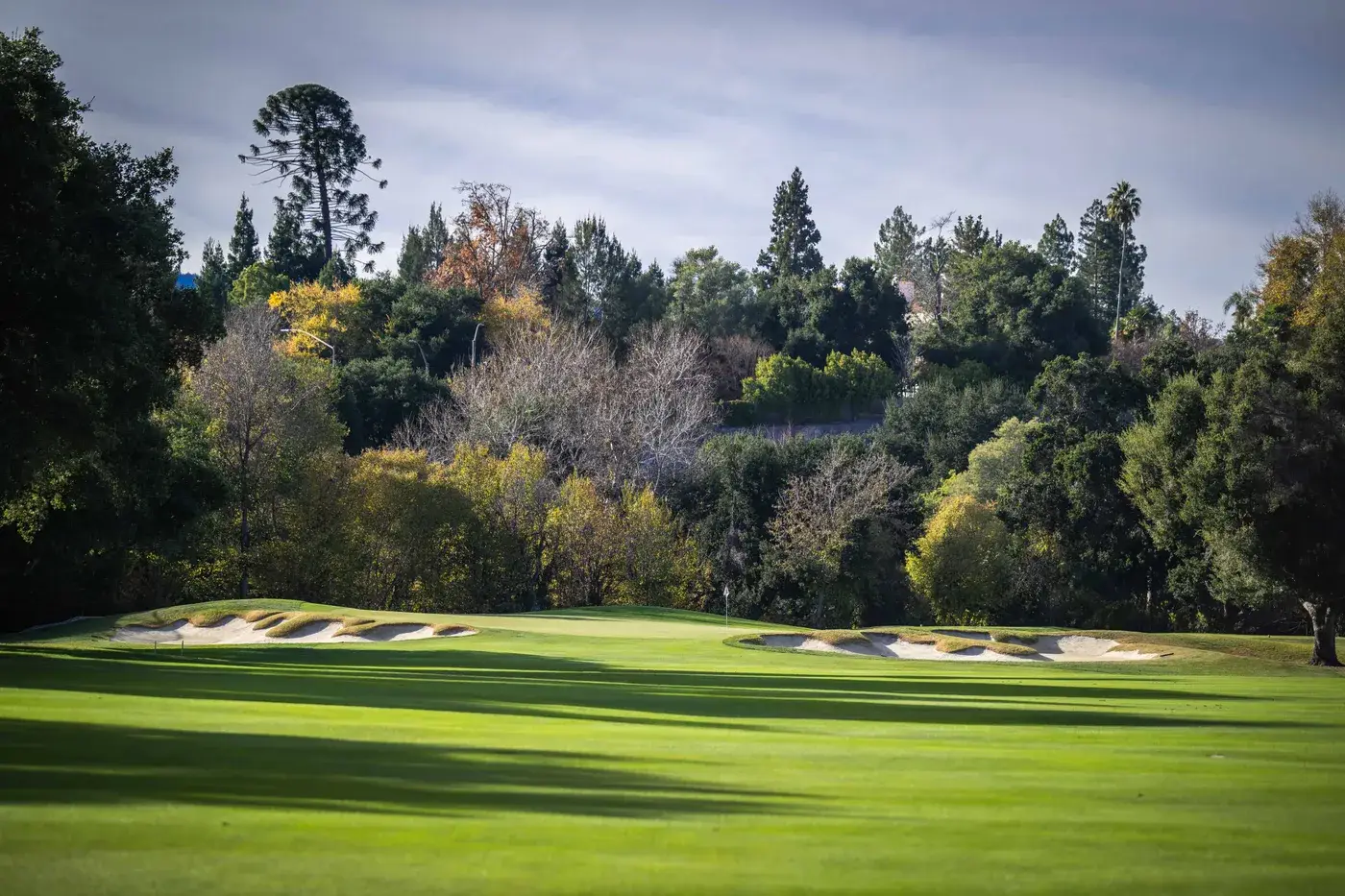
Tucked into the oak-studded foothills above campus, this is where Tiger Woods, Tom Watson, and Michelle Wie sharpened their games. George Thomas — of Riviera and L.A. North fame — routed it through dramatic elevation change, hiding a member’s course inside a course good enough to produce major champions. The back nine climbs into the hills and tumbles back down, with downhill par-4s that reward a well-judged, running tee ball.
 Michigan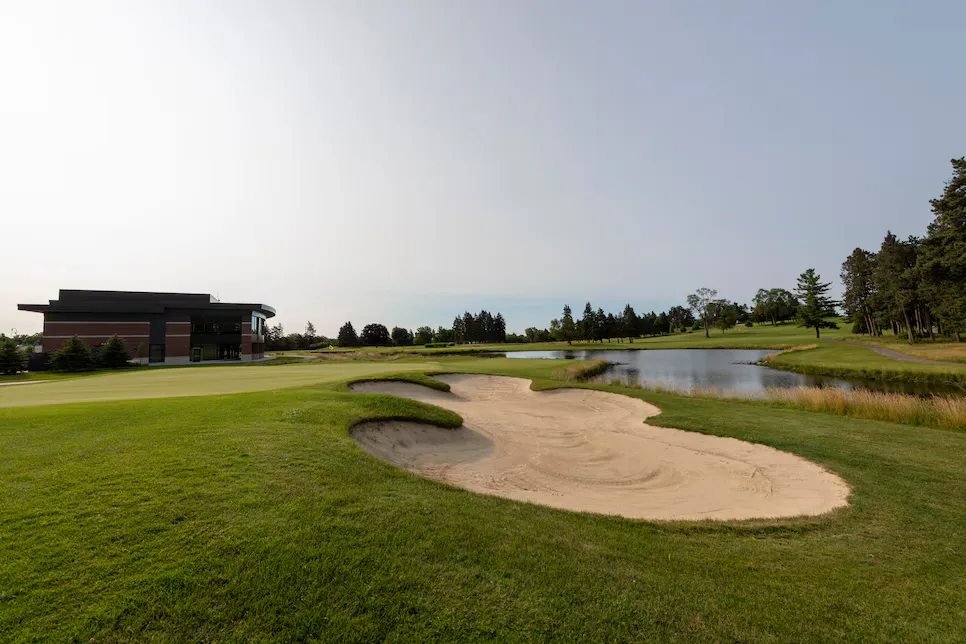
The other MacKenzie on this list, and a short walk from the Big House. Built in the same window as Cypress Point and Augusta National, it packs the master’s genius — wild green complexes, cape-style bunkering, tempting angles — onto a compact, rolling site. Don’t let the modest yardage fool you: the greens punish a lazy approach every single time.
 Oklahoma State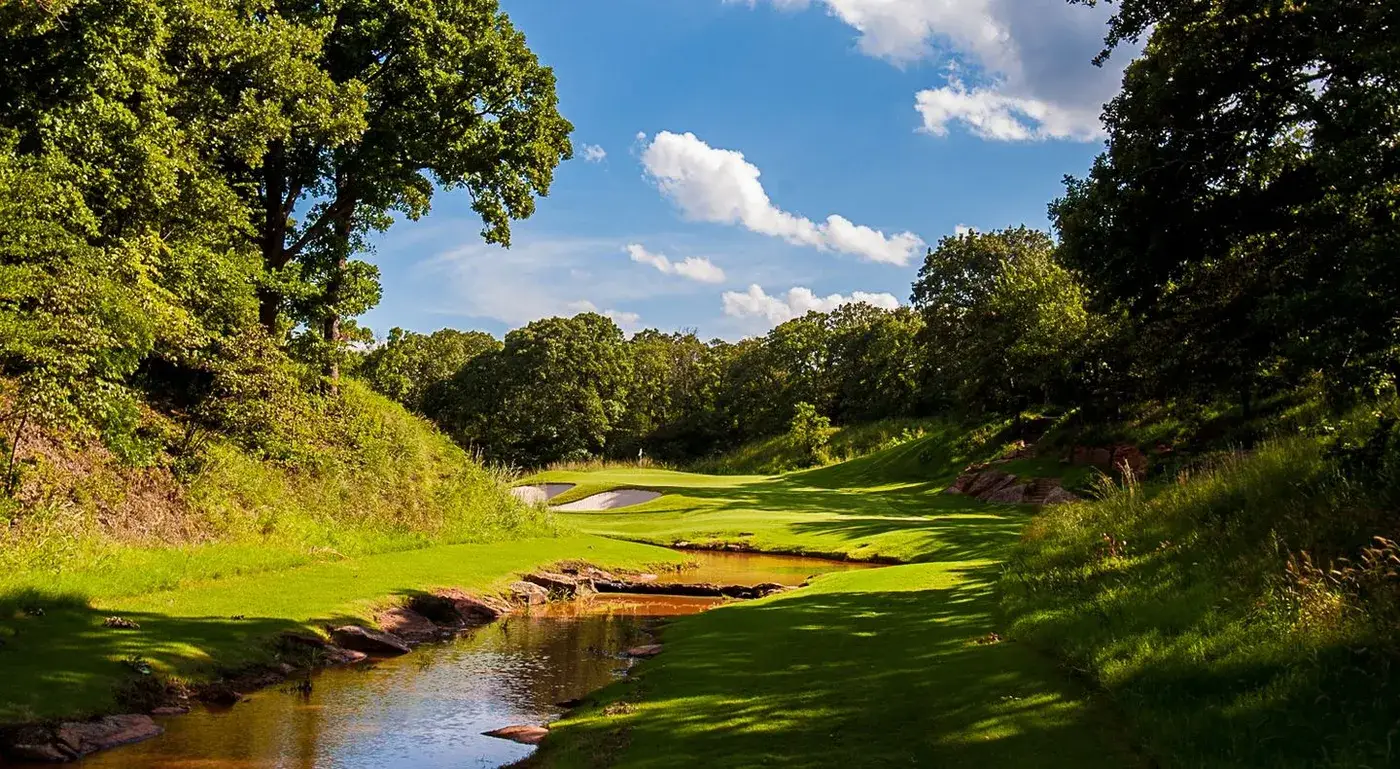
The most feared course in college golf, full stop. Fazio threaded it through native blackjack oak and prairie, with water and forced carries lurking down the stretch — there’s a reason it keeps drawing the NCAA Championship. The closing holes play around a lake to greens tucked hard against the water, and they’ve wrecked more than a few national-title hopes.
 Indiana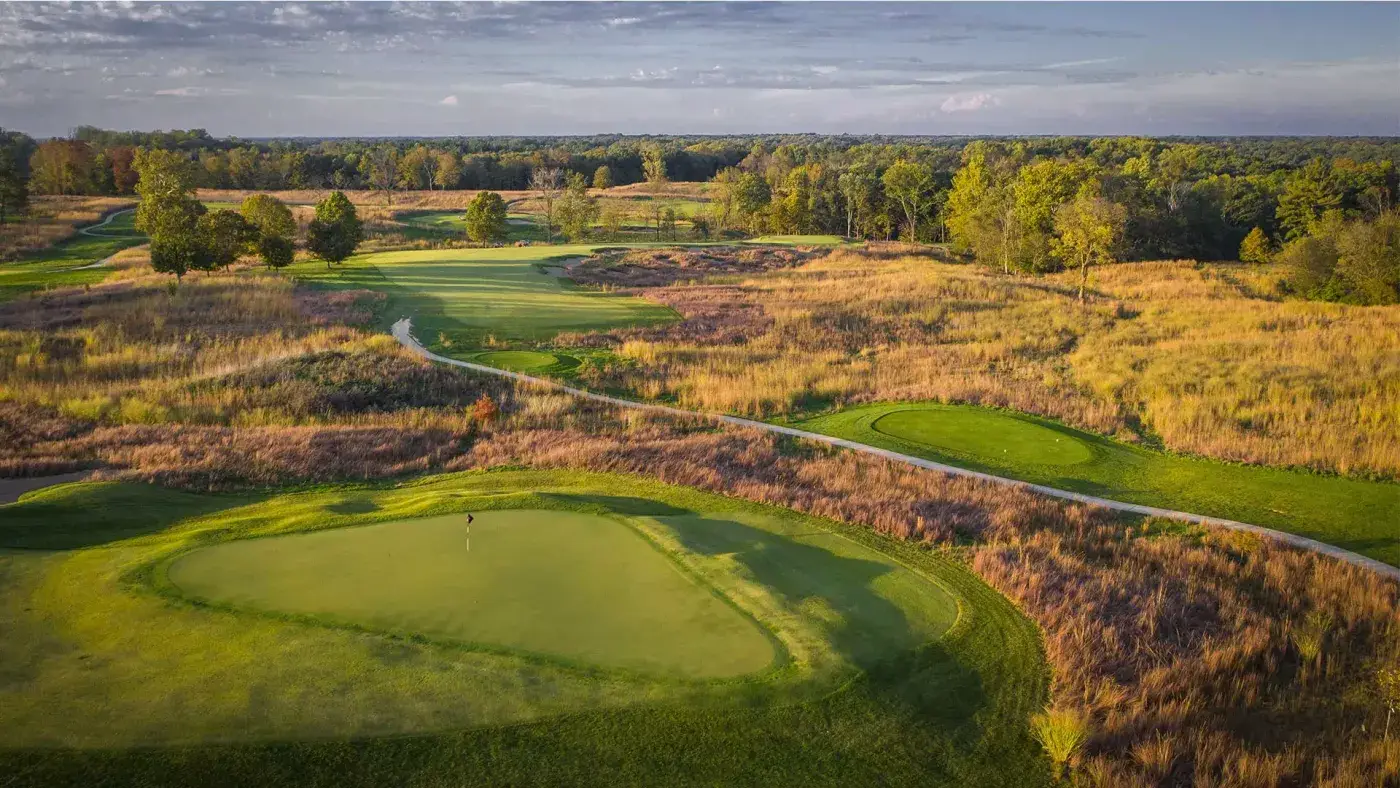
The newcomer, and proof of how far a bold redesign can go. Smyers cleared out the old trees, widened the corridors, and reshaped the property into a firm, fast, links-leaning test that jumped straight onto the national rankings. Generous off the tee and brutal around the greens — exactly the modern, strategic direction the college game is heading.
 Notre Dame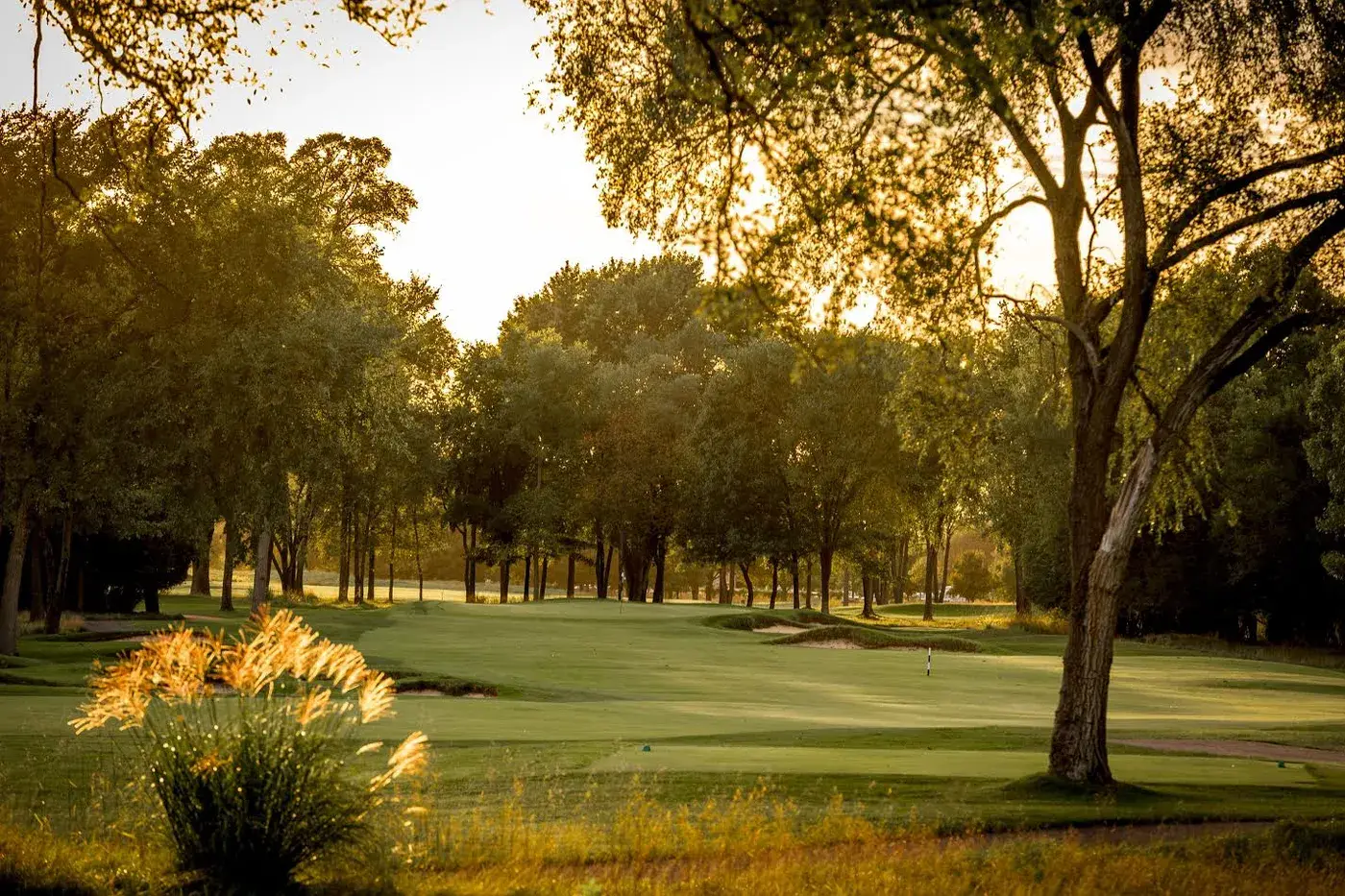
Bill Coore and Ben Crenshaw’s minimalist touch, laid out just off campus with the Golden Dome never far from view. Native fescue frames wide, ground-game-friendly fairways, and the routing rewards the player who thinks two shots ahead over the one who just bombs it. A quietly brilliant walk that gets better every time you play it.
 Virginia Tech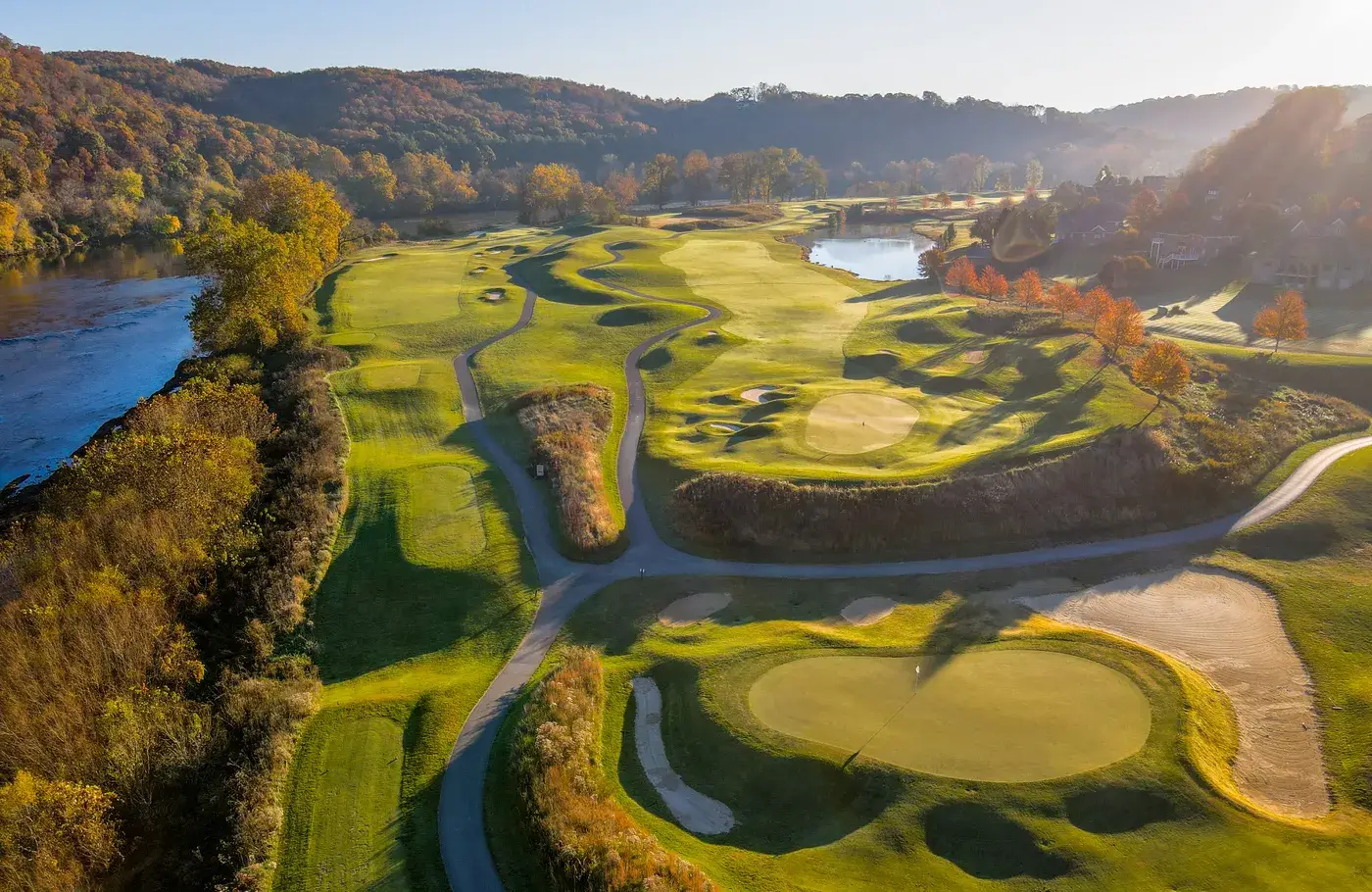
Classic Pete Dye theater, strung along the banks of the New River. Railroad ties, deceptive angles, and water in play on a run of holes that demand nerve — this is a course that will happily hand you a big number the moment you flinch. The riverside stretch is as scenic as anything on the list, and twice as intimidating.
 Wisconsin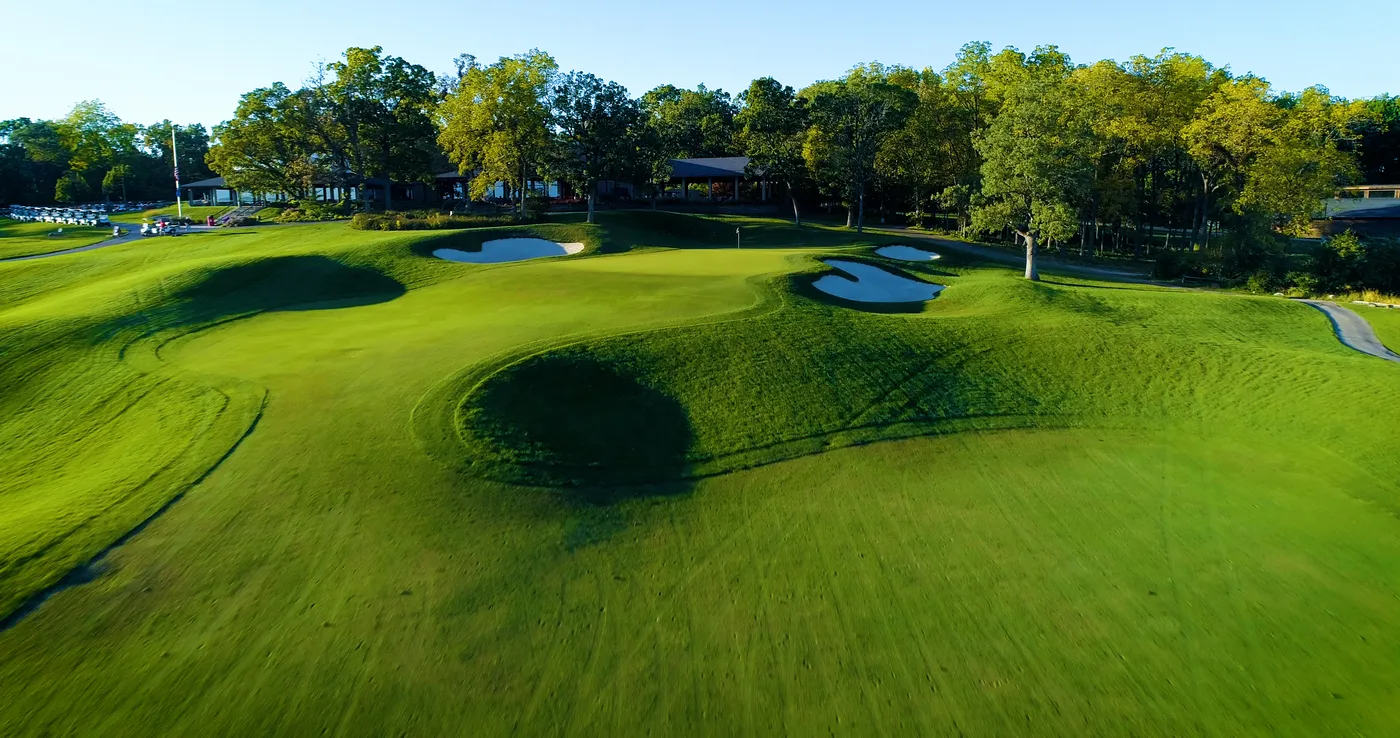
A course of two personalities: an open, prairie-style front nine that gives way to a tighter, wooded back through the Wisconsin hardwoods. RTJ Jr.’s design has enough teeth to host a PGA Tour Champions event alongside the Badgers. Firm, fair, and a genuinely fun daily-fee play for anyone passing through Madison.
 Duke
Duke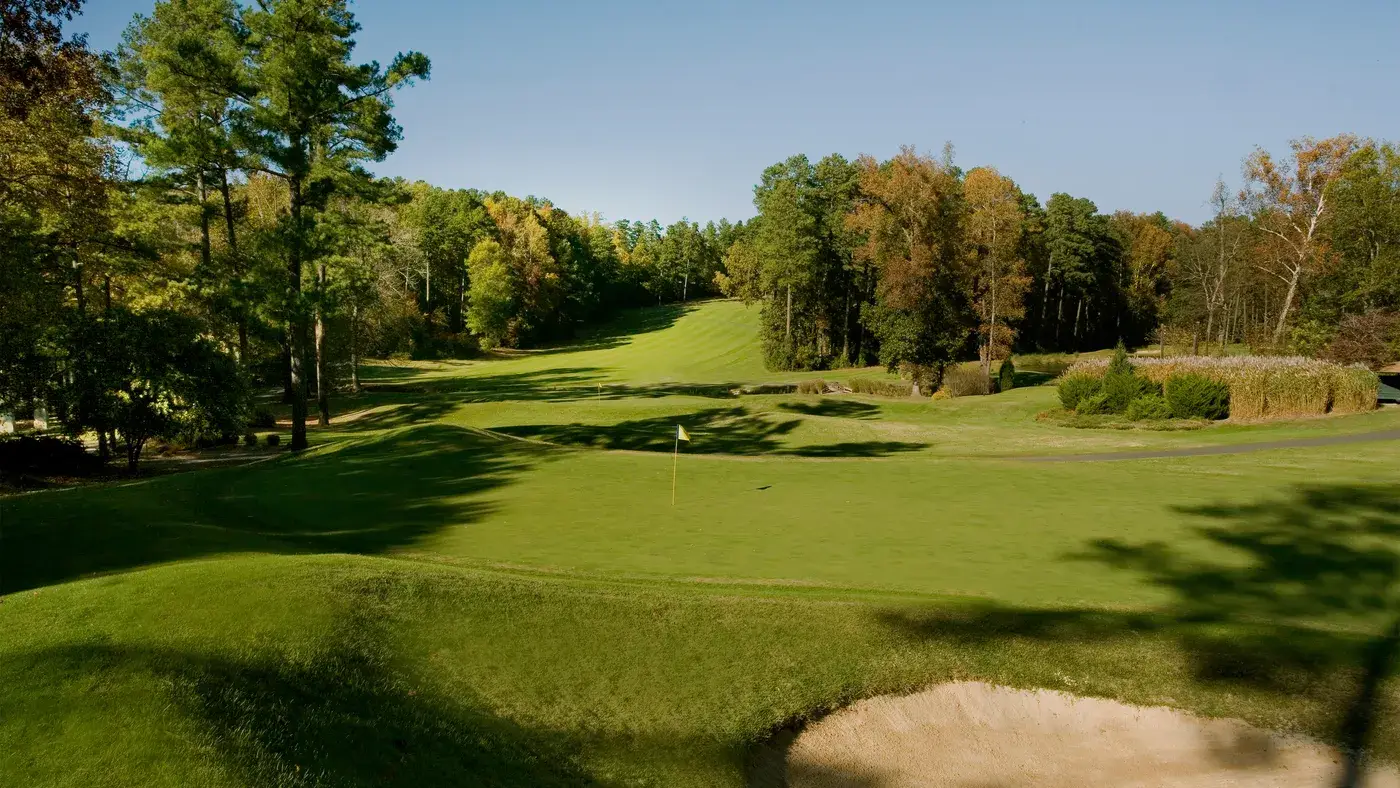
Robert Trent Jones Sr. laid it out in 1957; his son gave it a muscular redesign decades later. Set among the towering pines of the Carolina Piedmont, it’s a stout, traditional parkland test that also happens to be one of the best public-access university courses in the country. Book a tee time and the on-site Washington Duke Inn and make a weekend of it — a fitting anchor to a list this deep.