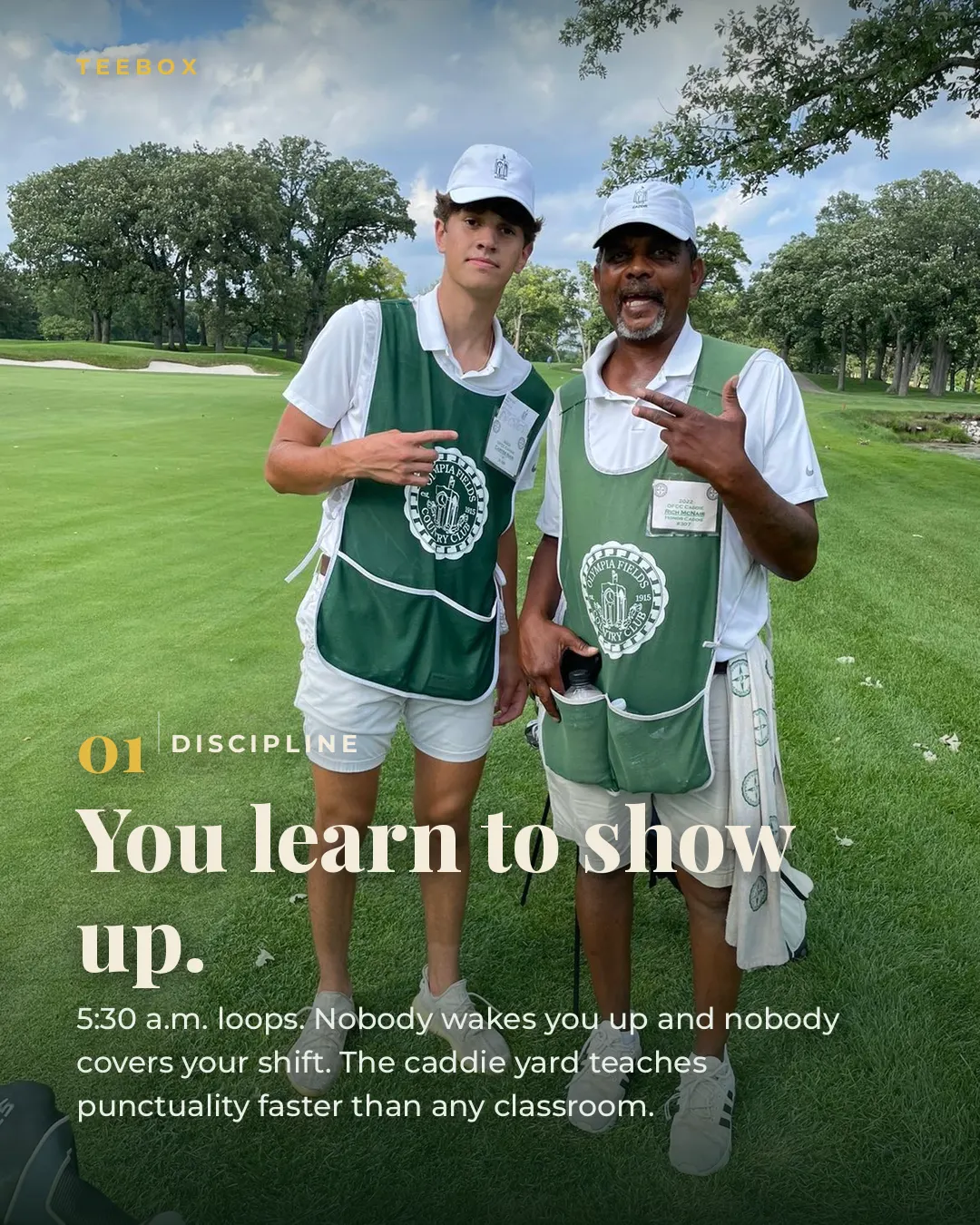
Loops go out at 5:30 a.m. Nobody wakes you up, nobody covers your shift, and the caddie master doesn’t reschedule the morning around you. Miss your window and the bag goes to the kid who was there. The caddie yard teaches punctuality faster than any classroom ever will — and it pays you in cash the same day for learning it.
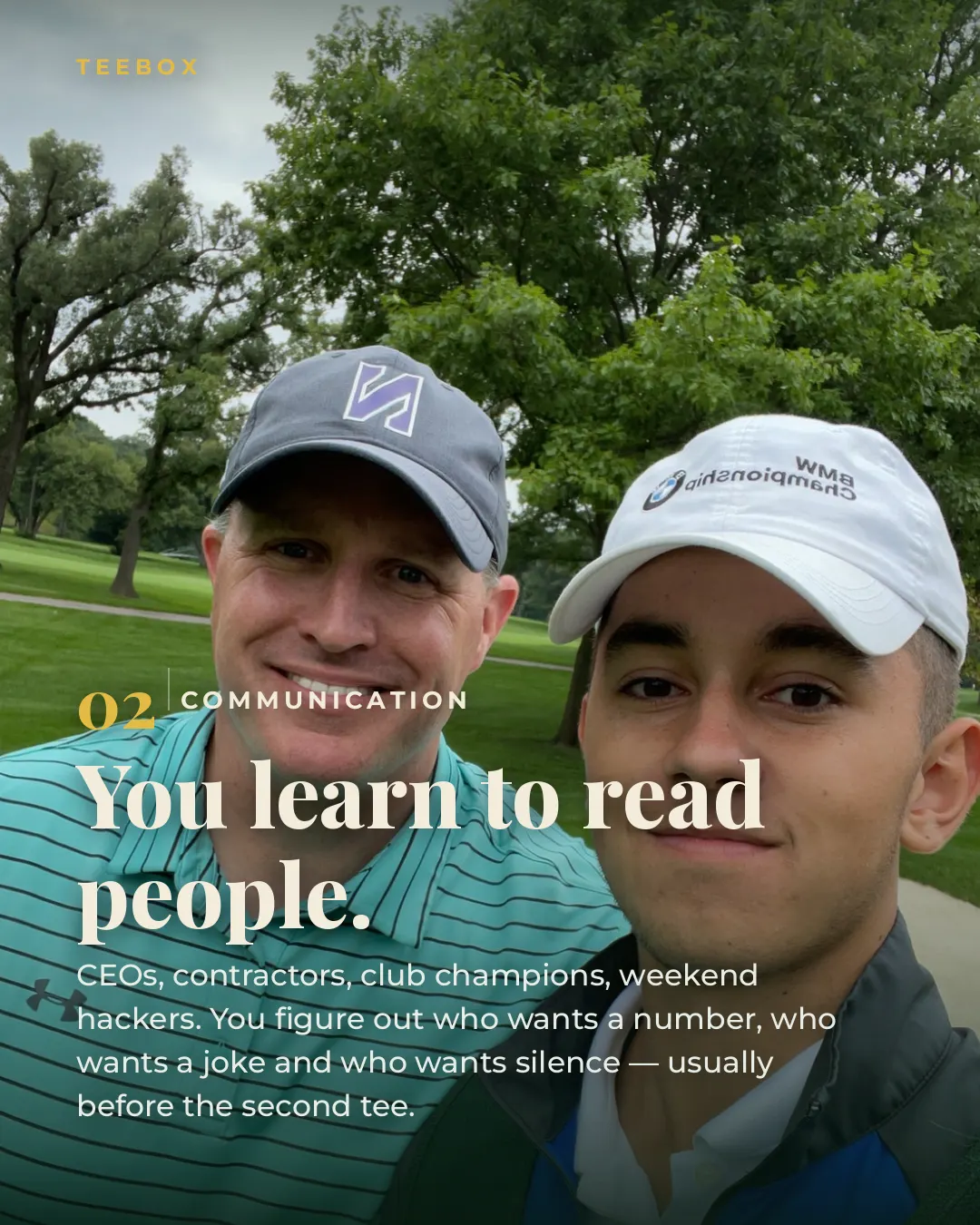
CEOs, contractors, club champions, weekend hackers — the loop hands you all of them, four hours at a time. You figure out fast who wants a yardage, who wants a joke, and who wants total silence, usually before the second tee. There is no other job a fifteen-year-old can get that teaches that read of a room — and no interview question it doesn’t help with later.
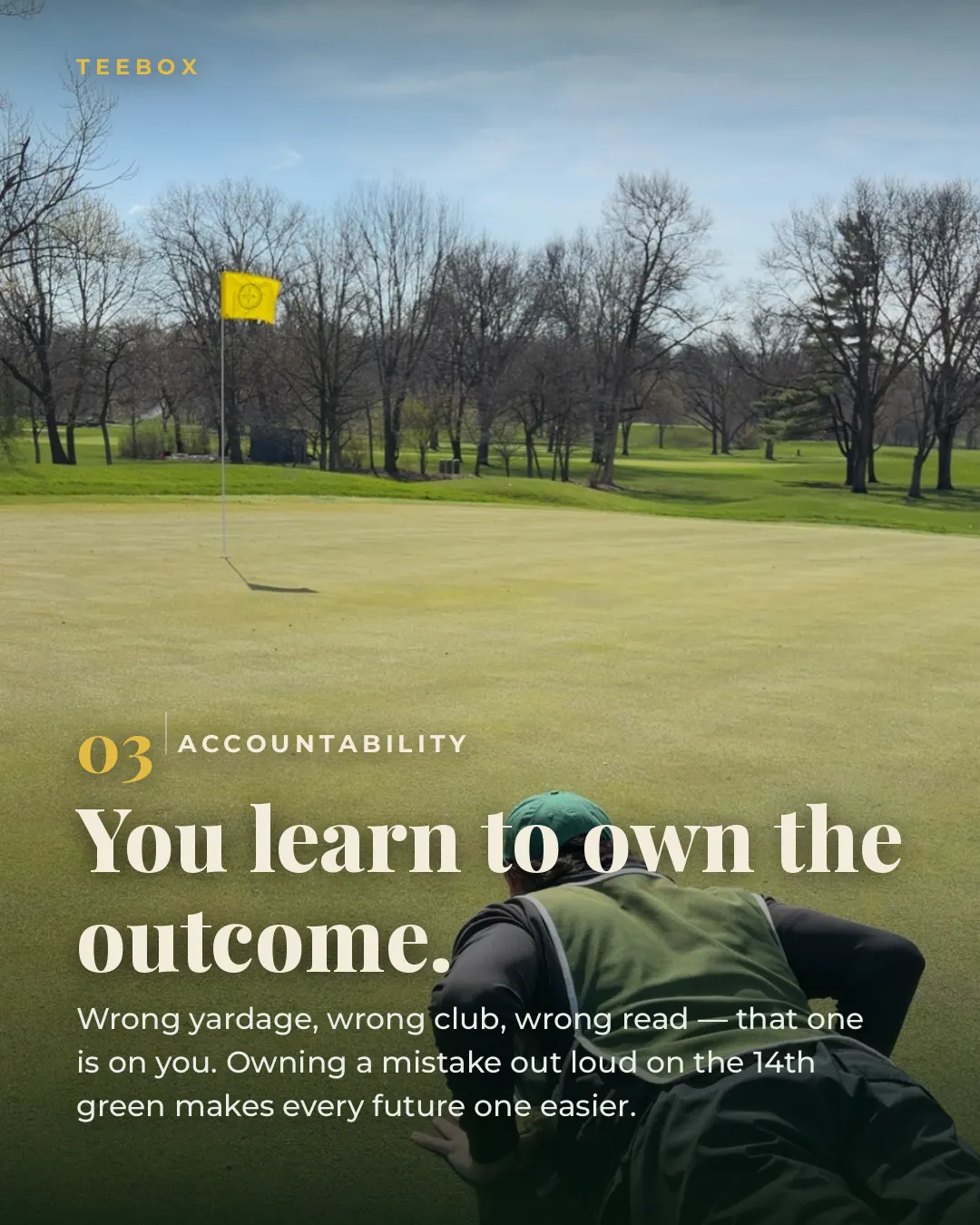
Wrong yardage, wrong club, wrong read — that one is on you, and everyone in the group knows it. So you say so, out loud, on the 14th green, and you give a better number on 15. Owning a mistake in front of an adult who’s paying you is a skill most people don’t learn until their first real job. Caddies learn it at fourteen.
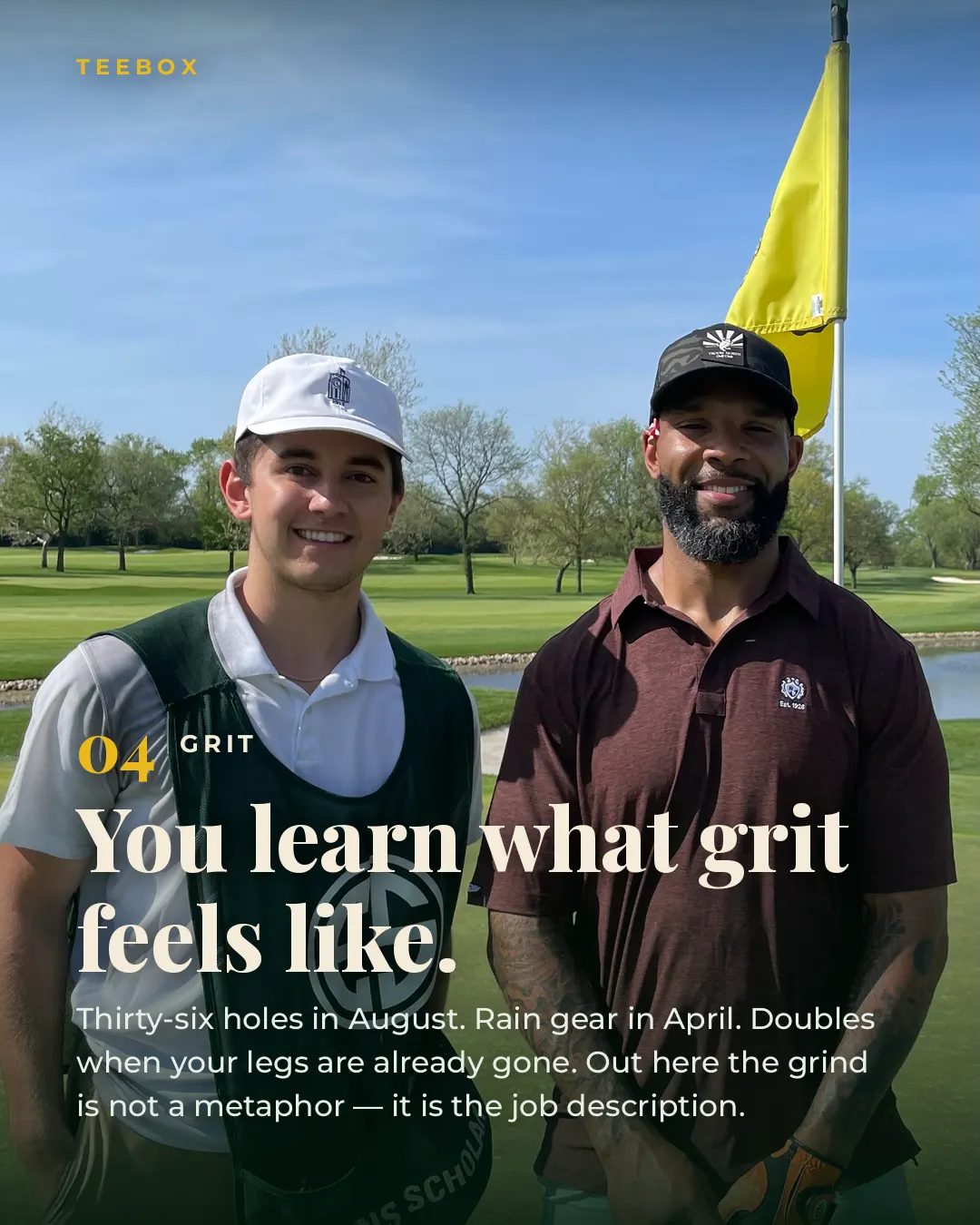
Thirty-six holes in August. Rain gear in April. A double bag when your legs are already gone, because the second loop is where the real money is. Out here the grind is not a metaphor — it is the job description. You finish the summer with legs, calluses, and the quiet knowledge that you can do hard things on purpose.
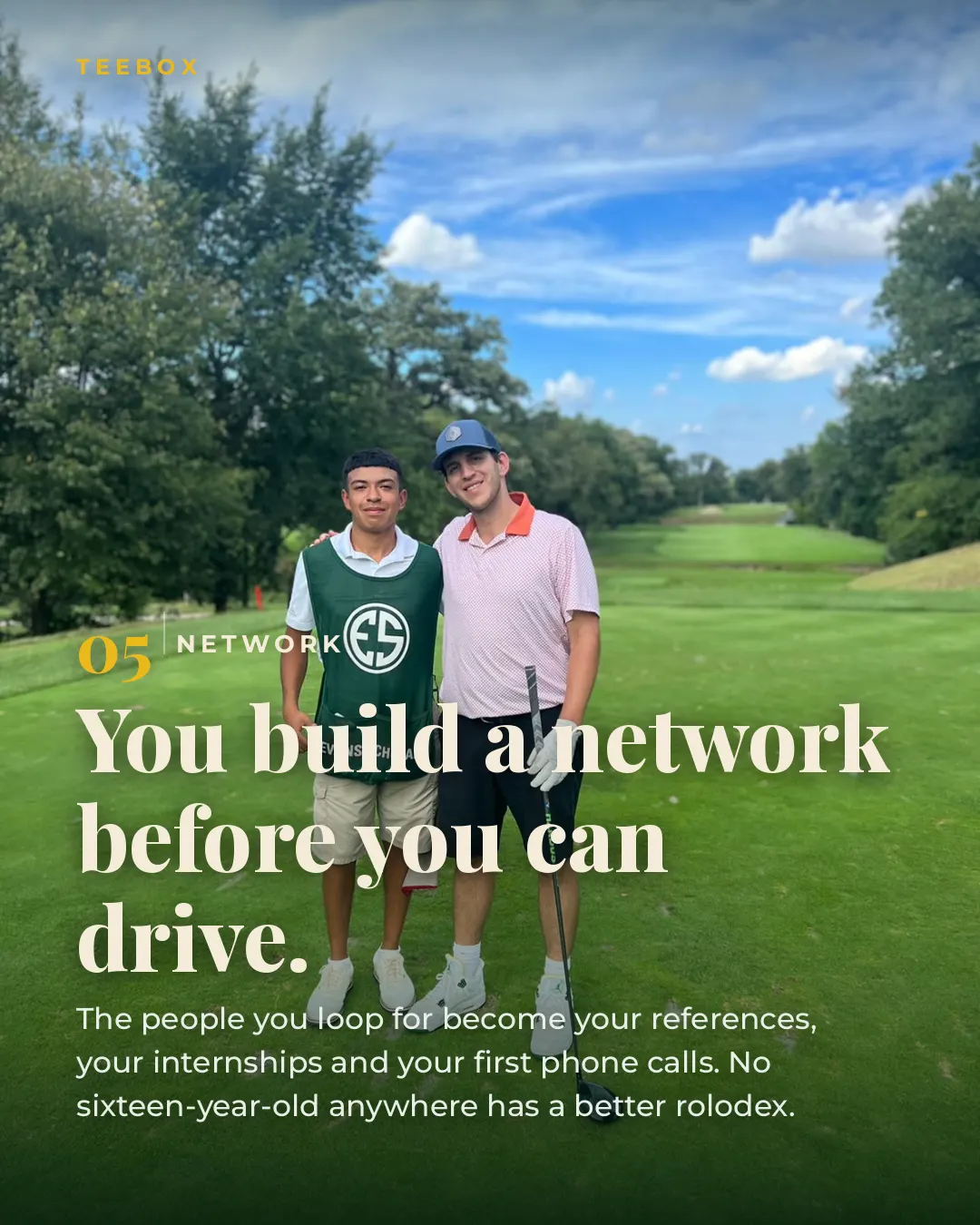
The people you loop for become your references, your internships, and your first phone calls when you need a door opened. Members remember a good caddie for decades — and good caddies grow up to be the members doing the remembering. No sixteen-year-old anywhere has a better rolodex.
And then there’s this: a full ride to college
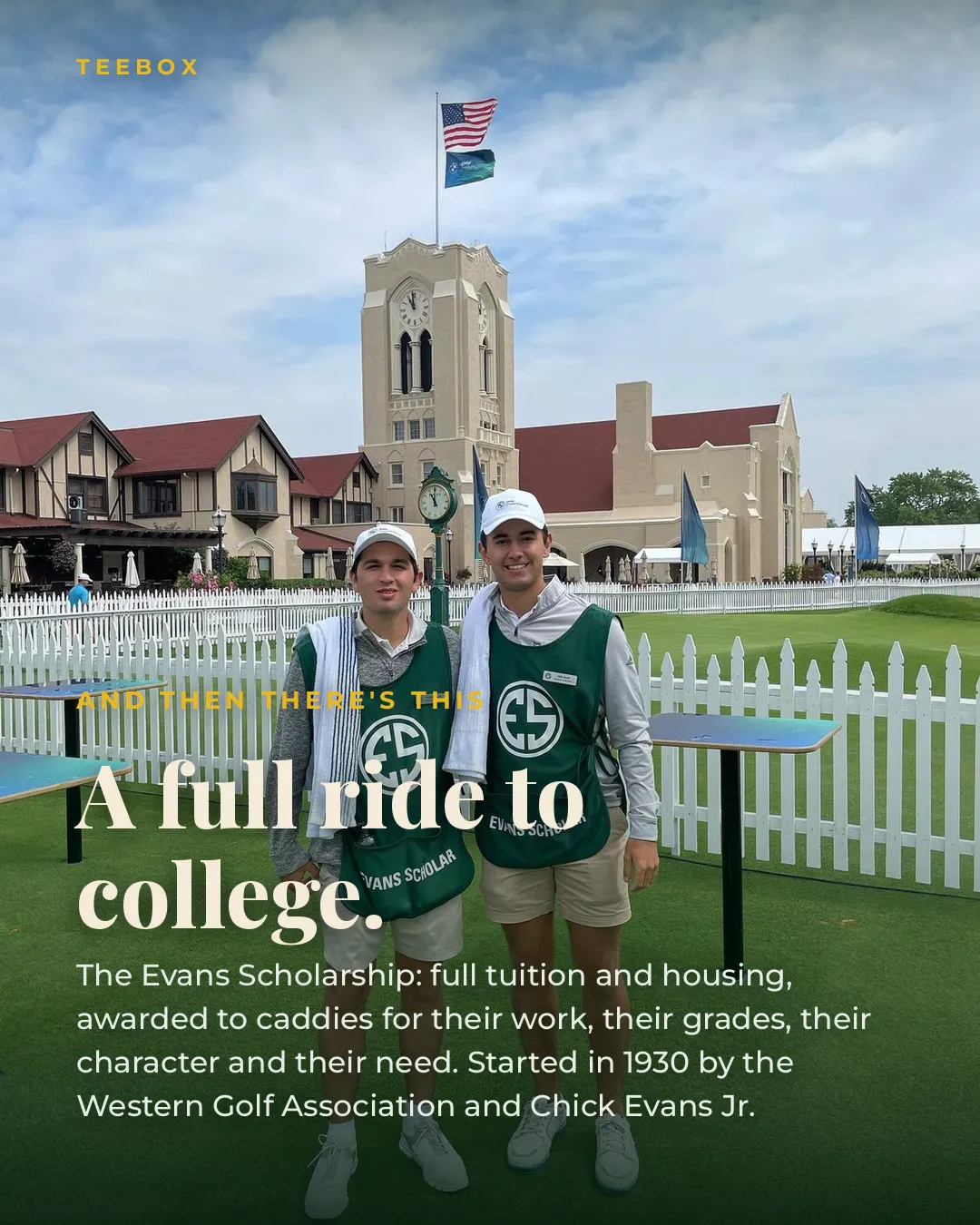
In 1930, amateur great Chick Evans Jr. and the Western Golf Association started a scholarship with a simple premise: caddies who work hard, keep their grades up, and genuinely need the help should get to go to college. Nearly a century later, the Evans Scholarship is the largest scholarship program in golf — full tuition and housing, awarded on four criteria: a strong caddie record, strong grades, demonstrated financial need, and character.
Scholars live together in Evans Scholarship houses on campus, which is half the magic — you arrive at school with sixty built-in friends who all got there the same way you did. Applications open senior year of high school, and the caddie record matters most: most winners have looped for two or more seasons. That’s the real answer to “when should I start caddying?” — freshman or sophomore year, so the record is there when the application is.
How to get a bag
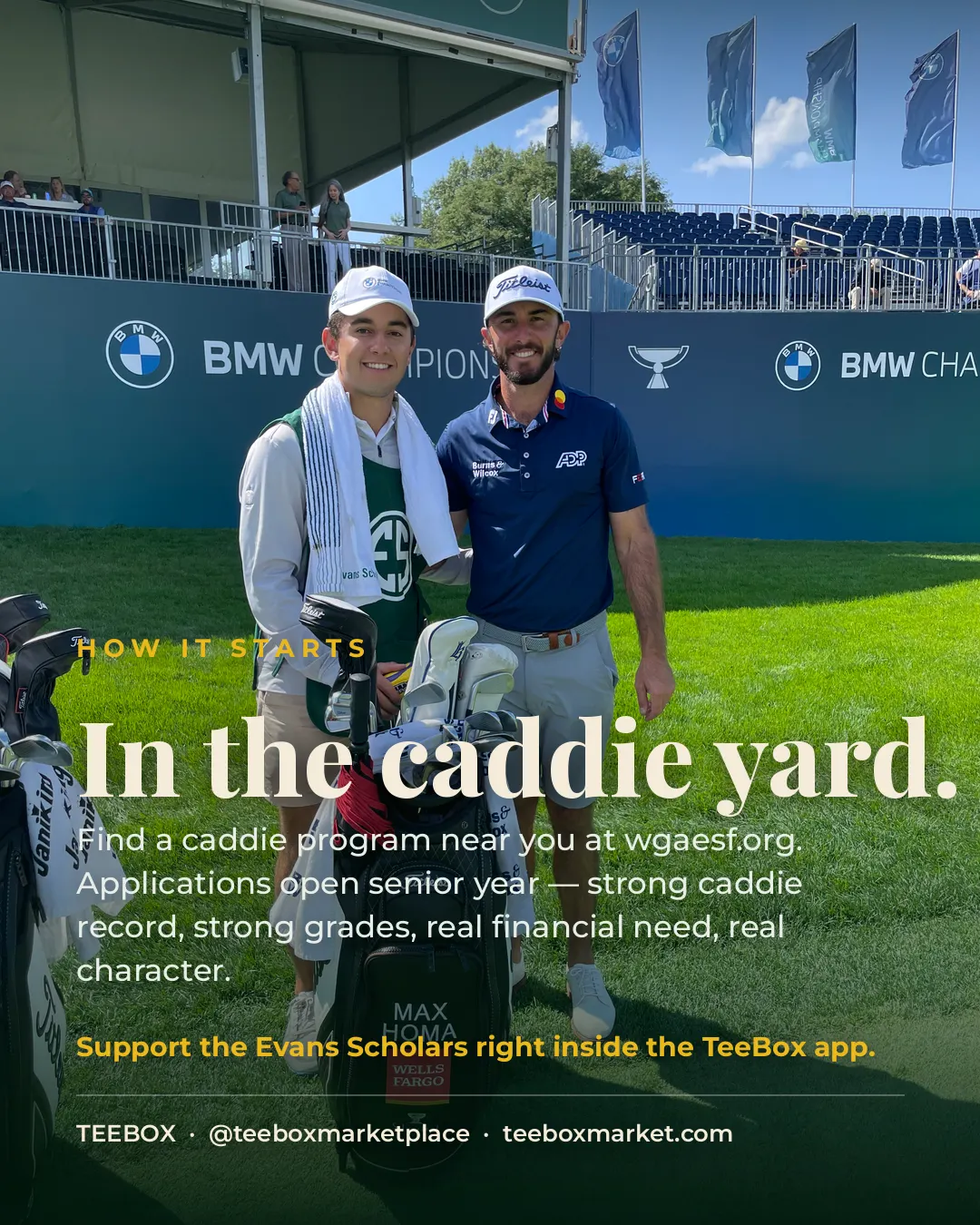
Getting started is simpler than most people think:
1. Call the caddie master. Nearly every private club with a caddie program has one, and spring is when they staff up. You don’t need to know golf — most programs train new caddies from zero. Many take kids as young as 13 or 14.
2. Use the WGA’s program finder. The caddie program locator at wgaesf.org lists Evans-affiliated caddie programs near you — if the Evans Scholarship is the goal, start at a club that sponsors scholars.
3. Show up early, every time. New caddies get bags by being in the yard when the first groups go out. The fastest way to become a regular is to be the kid the caddie master never has to look for.
4. Learn the quiet skills first. Keep up, stay ahead of your player, clean the ball on every green, never talk during a swing. Yardages and reads come with time — hustle and manners get you re-requested tomorrow.
5. Track your loops. Every round counts toward the caddie record the Evans committee reads. Two seasons of steady looping, honest grades, and a caddie master who’ll vouch for you — that’s the profile.